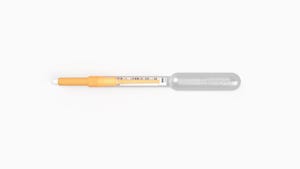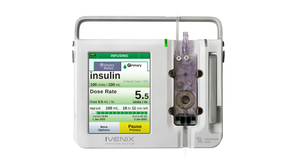
Shortly after Becton Dickinson and Co. announced its departure from the $7 billion worldwide blood glucose monitoring market, several companies pounced on the opportunity. Today's Chicago Tribune reports that Abbott Laboratories, LifeScan Inc., and Roche Diagnostics have offered free blood glucose meters and test strips to Becton Dickinson patients. This is all part of a race to secure part of the highly competitive and growing diabetes market. Becton Dickinson will discontinue its glucose monitors and strips by the end of 2007 but will still market other diabetes products such as insulin syringes and pen needles.
October 5th, 2006
0
Yesterday's New York Times showcased an innovative prosthetic foot that uses artificial intelligence to replace lost muscle function in amputees. The Proprio Foot, created by Icelandic manufacturer Ossur, has sensors that imitate neural receptors to keep track of where the foot is in space (also known as artificial proprioception). The Times' interactive graphic illustrates how the device's components, which also include software and actuators, generate a more natural and safer way of walking. Patients with the Proprio Foot should be able to walk up ramps and stairs with more ease, a task that can often be quite difficult with a prosthetic foot.
October 4th, 2006
0
Giving doctors monetary rewards for choosing certain technologies has been at the center of strong debate.  Many device manufacturers are against the practice, and it turns out that a lot of Americans don't favor it either. According to a Harris Interactive survey, 67% of Americans think gainsharing should be banned. The participants were asked via telephone whether or not hospitals should be permitted to pay doctors who select less expensive treatments or if the practice should be prohibited. Slightly more than one-quarter (26%) of the people thought hospitals should be able to more forward with gainsharing, while the remaining 7% weren't sure. MD&DI received the information about the survey, which was conducted between September 15 and 19, from AdvaMed today.
October 3rd, 2006
0
Artery repair, particularly angioplasty and stenting, has been one of the device industry's most lucrative sources of income. Now, reports the Boston Globe, biotechnology and tissue engineering are trying to get in on the act. The article, in today's paper, spotlights a Cambridge, MA-based company called Pervasive Therapeutics, Inc. that has begun human trials of a method to repair lesions in arteries by wrapping them in a gelatinous sheath of living, healthy cells. It works, says the company's cofounder, like "a cellular Band-Aid," fixing arteries by rebuilding them inside-out. If successful, this could have huge implications for the device giants that rely on stents for a major part of their revenues.
October 2nd, 2006
0
The Heart Rhythm Society yesterday finalized its recommendations for reforming policies and guidances of implantable heart devices. Most notably, it suggested FDA stop using the word "recall" in public communications about problems with heart devices, on the theory that consumers believe that a "recalled" device must be removed immediately, which is rarely ever the case. Yesterday FDA issued a statement supporting much of what the society said, including the expansion of its cardiac advisory panel's duties into evaluating postmarket safety and effectiveness issues. But it did not say whether it would drop the "recall" lingo. It should, but only if terminology that appropriately identifies the gravity of the situation can be agreed upon.
September 29th, 2006
0
Is it possible that one day doctors will perform surgery in space? French physicians seem to think so, as a five-man team operated on a patient in nearly weightless conditions yesterday. The Associated Press reports that the procedure is part of the European Space Agency's project to develop Earth-guided surgical space robots. Lasting eight minutes, doctors removed a cyst from a man in 22-second intervals. While the concept of space surgery might be exciting to some people, it's way too expensive to justify its use in the future. Aside from the costs to develop the technology, chartering such a flight to perform the procedure would cost the equivalent of nearly $38,000 U.S. dollars, reports the U.K. Times Online.
September 28th, 2006
0
The Kaiser Family Foundation released a report yesterday that some will find shocking. It found that the average cost of a family insurance plan is growing twice as fast as inflation, and has doubled since 1999. This is likely to lead to more calls to reduce healthcare costs. But David Leonhardt's column in today's New York Times puts things in a more reasonable perspective. Yes, healthcare costs used to be cheap half a century ago, but back then no one expected much from healthcare, nor for it to make much of an impact on longevity. But today's expensive healthcare, including new medical devices, does have a significant impact on longevity. Of course waste does exist in the system, and we should do our best to eliminate it. But innovation costs money. Would we trade those costs for a shorter lifespan?
September 27th, 2006
0
Yes, that's billion, with a "b." Johnson & Johnson is seeking $5.5 billion in damages from Abbott and Boston Scientific related to its failed Guidant acquisition, reports Reuters News. J&J had an agreement to buy Guidant that the latter broke in order to take a richer deal from Boston Scientific. The suit, filed in federal court in New York City, alleges that Guidant leaked confidential information about its deal to Abbott, which passed it on to Boston Scientific, who used the knowledge to win the battle for Guidant. Boston Scientific ended up spinning off Guidant's stent business to Abbott.


September 26th, 2006
0
Leslie Norwalk, deputy CMS administrator, will take over the top job at CMS on an acting basis, reports CQ.com (registration required). Herb Kuhn, head of the agency's Center for Medicare Management, will move into the number-two position. The moves follow the departure of Mark McClellan, announced earlier this month. Both Norwalk and Kuhn have been mentioned as potential permanent successors to McClellan. Either would be a fine choice, as the agency needs continuity as it works to implement sweeping changes introduced under McClellan's watch.

September 26th, 2006
0
Today's Boston Globe has a piece praising a technology that caught our eye recently, too: the VeinViewer, a device that helps locate hard-to-find veins. Many of us have, or know someone who has, veins that don't present themselves easily when it comes time for an injection or to draw blood. This condition causes pain and discomfort. The VeinViewer, made by Luminetx Corp. (Memphis) and marketed by Diomed (Andover, MA), uses near-infrared light to produce a "vein map" on the skin. About 30 vein care centers so far are using the device, which went on the market in May. Expect patient demand to cause that number to climb.
September 25th, 2006
0