







| Washington Wrap-Up |
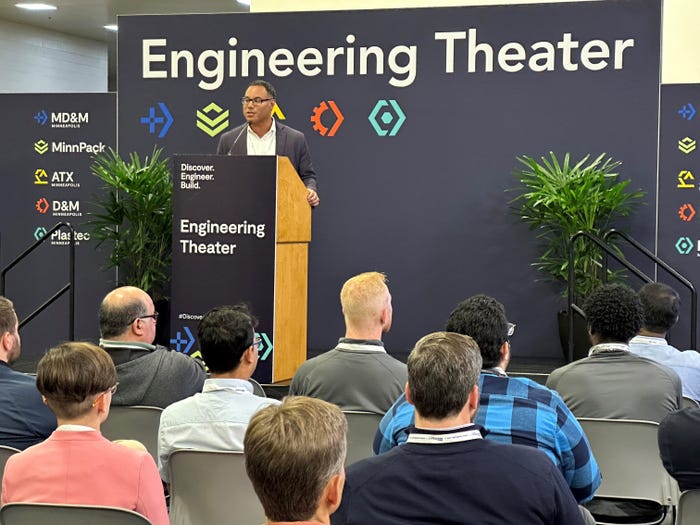
Now entering his third year as CDRH director, Jeffrey Shuren is looking like a newly energized, innovative leader. This spirit was on display at AdvaMed’s annual conference in September, when Shuren described how the recently formed center science council has begun working to improve review predictability and consistency.
Shuren said the center plans to “raise the bar for clinical studies across a device type.” Whereas “before, those decisions were made at the lowest levels of the organization,” he said, “they now need to be made at the highest levels.”
In addition, he said, CDRH has started introducing standard operating procedures (SOPs) to help reviewers decide when and how to request additional information from companies. This, Shuren said, is “to assure that if review teams want to ask for more, or they want to change the bar level, it has got to be signed off at the appropriate level of management within the organization.” He also promised SOPs for dealing with mid-process personnel changes, so that “if a new [reviewer] comes in, they can’t simply, at that level, change expectations for a product. That has got to be considered at a higher level to assure there is far more predictability for industry.”
Shuren said CDRH has implemented SOPs to more efficiently communicate changing safety requirements to industry. He said that when a safety issue arises, rather than wait to issue a draft guidance, the science council will evaluate the situation and decide whether a change is needed. The decision would then be announced via a notice-to-industry letter. “That would allow us to communicate with you not in a year or two but in a matter of two to three weeks,” Shuren said.
Shuren has been busy shaking up CDRH since assuming the top spot in 2009. Many of the changes the center is making are based on industry’s concerns about the predictability, consistency, and transparency of the 510(k) and PMA processes, he said. Device approvals have been a growing problem since 2002, when the agency began seeing increases in review cycles and additional information letter requests. Starting in 2005, he said, total review times began increasing. “Most of the cause resides with FDA, and we have not managed programs as well as we should,” Shuren said.
“Most of the cause resides with FDA, and we have not managed programs as well as we should.”— CDRH director Jeffrey Shuren, on increased review times. |
To get back on track, Shuren said CDRH is collaborating with industry. For example, the center would like to help industry improve its submissions. CDRH often receives lowquality submissions from industry, which require extra work to process. “It is profoundly inefficient and takes away our effort on other applications,” Shuren said. The center is cooperating with industry representatives to develop a policy for handling poor-quality submissions “so we can devote our resources more wisely,” he said.
There are a number of efforts underway to improve CDRH’s engagement with industry, specifically with regard to interactive review. “We know that in appropriate circumstances better engagement with companies at the right time in the right way can improve performance, and we can get to the right answer more quickly,” Shuren said. “But that needs to be better structured. He said the center is also “implementing a tracking system to follow our reviewers and to look at other people who are not engaging as they should,” the details of which are currently being negotiated with industry.
Shuren also promised new a guidance document on presubmission meetings, including pre-IDE meetings. The guidance would clarify the agency’s expectations about such meetings and lay out what companies should provide. “One concern we hear is that you get input in those meetings and the center then doesn’t stand by them,” he said. “We want to change that.”
The 510(k) Program Should Be Saved, Not Scorned