| Q&A |
New CEO looks to send clear message about direction of successful hearing implant company.
It would have been surprising if Bill Murray, a device industry veteran and management expert, needed more than 60 seconds to say yes to the CEO post at Envoy Medical when it was recently offered to him. After all, the company’s unique hearing implant received unanimous FDA approval in 2010, the device itself has garnered tons of positive media coverage, and MDDI selected Envoy as one of its 50 Companies to Watch in 2010.
Public testimonials rarely get any better than the praise poured on the company’s Esteem prosthetic device. YouTube, NBC’s Today Show, Ellen, and Anderson Cooper have all covered the story of one patient, a 29-year-old mother of two toddlers in tears as she hears her own voice for the first time. The clips and related coverage feature prominently on the news page of the company’s Web site.
![]() |
"One of the major challenges of a breakthrough medical device in the healthcare system is that this is a cash-pay procedure . . . affordability for people is a major challenge"—BIll Murray, CEO Envoy Medical |
“If you’ve looked at any of the stories that are on the Web you can see that this is a very compelling and life-changing therapy for people,” Murray says. “It’s a huge opportunity to change people’s lives, which creates a great business opportunity, but it’s very rewarding at a personal level as well.”
Murray must manage both the marketing bounty and public expectation. Brought on board in June 2012, the new CEO points out that Envoy’s Esteem technology is an unreimbursed, “cash-pay procedure” with a $30,000 price tag. Making the transition from a consumer-based sales approach to a traditional device company business model is one of the main reasons he was brought in as CEO to replace Patrick Spearman, who remains on the company’s board of directors.
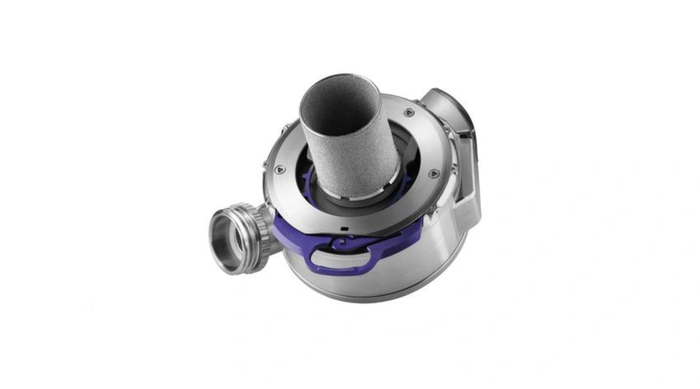
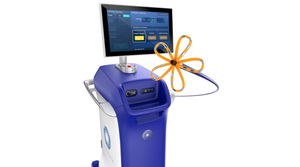
Designed to correct sensorineural hearing loss, the Esteem is a fully implanted prosthetic with no external components. The battery lasts 4½ to 9 years, depending on use, and can be replaced by a minor outpatient surgery, according to the company. Although Envoy, which is based in St. Paul, MN, has a European presence, the bulk of its business is in the United States, where the company has13 implant centers.
After receiving a BS in electrical engineering from the University of Florida, Murray began his career as a design engineer at Motorola from 1983 to 1985. Since then, he has held engineering management and executive positions in the medical device industry, life sciences, and the nonmedical device field, most recently as interim CEO at MTS Systems, which sells mechanical testing and simulation equipment. His career includes positions as president and CEO of ReShape Medical, an executive management consulting company, Applied Biosystems, and most extensively at Medtronic, where Murray held various senior executive posts.
In this exclusive interview Murray discusses the need for “long horizon” investors, the potential drawbacks to positive Web awareness, and the overall challenges of running a cash-pay device company.
Bill Murray: Just prior to Envoy Medical I had stepped in as interim CEO of MTS Systems, and that’s a $500 million public company that was going through a number of cultural change needs. I’m on the board of the company and was asked to step in as interim CEO.
When I finished that assignment I was giving a presentation to a number of business executives here in the Minneapolis area on changing cultures and values-based leadership. Out of that discussion and presentation I got a call from one of the Envoy board members, Glen Taylor, who’s a successful business executive here in the Minneapolis area [and a former Minnesota state senator]. He said [Envoy] was looking for somebody with medical device experience and experience in changing cultures and building a long-term, sustainable business. That’s how I got engaged with the company, and I talked to a number of the other board members. I was familiar with Envoy from my Medtronic days.
What intrigued me is that this was a company that already has FDA approval; PMA approval was achieved in March of 2010. As an early stage company, it’s already commercial and that was highly appealing to me. In today’s medical device world FDA approvals are a huge challenge and create a lot of uncertainty as they relate to getting finance. I saw that as a major positive for the company.
If you’ve looked at any of the stories that are on the Web you can see that this is a very compelling and life-changing therapy for people. It’s a huge opportunity to change people’s lives, which creates a great business opportunity, but it’s very rewarding at a personal level as well.
BM: I do know a number of people who have hearing loss but no one who has an Esteem implant.
BM: First of all, I’d say the board was looking for a change, and Patrick is still on the board of directors. Honestly, I don’t have all the background and history, and I think it would just be speculation on my part.
BM: When I speak of changing cultures and values-based leadership my primary message is about tone at the top. The organization reflects the values of the leadership. I believe strongly in being clear about what is expected behavior and then walking the talk.
BM: The cultural change at Envoy Medical was not an exact corollary to the presentation I gave. It was a change in our business model from national direct-to-consumer advertising and direct-selling to patients to a more traditional medical device business model where the device manufacturer sells to the healthcare provider.
BM: We have international sales, yes, and we have the CE mark for the European Community. The majority of our sales are in the U.S. This is a cash-pay procedure for the most part, and so as a cash-pay procedure the U.S. marketplace is more culturally conducive to cash-pay procedures.
BM: One of the major challenges of a breakthrough medical device in the healthcare system is that this is a cash-pay procedure that is north of $30,000 all-in, which includes the device and the procedure. Obviously, affordability for people is a major challenge. There are over 20 million people in the U.S. who have sensorineural hearing loss that would meet the indications. When you’re in a cash-pay market gaining awareness for the target population [is important]. Finding those folks who have [these indications] is fairly straightforward, but finding ones who can afford to pay for this [procedure] makes it more of a challenge. Then [there is the matter of] finding those who can afford to pay for it and can get over the fear of surgery.
In general, media and marketing expenses can be very cost-prohibitive. That is one of the business challenges we have with a new therapy like this, where the healthcare system doesn’t yet recognize the value in reimbursement in a big way right now. You have to have investors with a long horizon because gaining reimbursement often takes multiple years after FDA approval.
BM: We’re still working through that—recognizing that I’ve been here for about 3½ months. There is a good solid foundation and rationale that this procedure will ultimately be reimbursed, but with any new therapy it takes more than just the PMA clinical study to get reimbursement. Additional objective clinical evidence and publications, patient advocacy, and physician advocacy will ultimately drive that. That’s a work in progress.
BM: Certainly we can, but what our reimbursement advisors will tell you is that you’re going to have to meet a certain threshold of clinical data to get their attention. Where we are at is we have a lot of great clinical results, but we still need more with a broader set of surgeons and broader patient population to make that argument compelling.
BM: We have just over 900.
BM: That’s right.
BM: I don’t comment on individual patients.
BM: There are stories out there but because of HIPAA and what have you….
BM: The way I think about this is when you think about other middle ear devices that are least partially implantable—and ours is fully implantable—the cochlear is probably the closest surrogate, if you will, and that product is more costly than ours. I would never say never, but the real focus for us right now is how we make sure the value that this therapy provides is realized by the medical community and patients.
BM: The surgeons who do this procedure do middle ear surgeries. They’re otologists and neurotologists. They’re a subspecialty of ENT. During the early days of the development of the product the company worked very closely with some of the key leaders in that field, and we essentially have used that network, because as with most medical professions there is an already established network for that specialty. We worked through the surgeon base in that network.
BM: Well, it’s a cash-pay procedure, and this is an active implantable. Hearing has many subjective aspects to it, and over time with hearing for patients who have paid for this procedure as part of that cash-pay agreement there is a commitment to support activation and initial fitting, but not long-term, continual adjustments. So patients need to go back and have follow-up procedures or adjustments—they’re called “fittings” to an audiologist—just as they would with a hearing aid. That’s not something that the device manufacturer would be responsible for paying for. That’s really between the audiologist caregiver or the surgeon’s site, if they’re actually involved in the audiology care.
BM: The company’s been around since 1995, so that’s 17 years, and yes that is accurate that we’ve received that level of investment.
BM: We have strong support for the company, but we’re not venture-capital backed. Our current investor shareholders are a fairly broad group of almost 500 people. So we’re different from, if you will, many traditionally financed, venture-backed device companies. We continue to enjoy their support and appreciate their confidence in getting to cash-flow positive in the future.
BM: At some point the shareholders will be interested in some sort of liquidity event, so going public is one of the options. With the number of shareholders we have at some point going public or getting acquired or some sort of exit strategy will be necessary to return the investment to shareholders. The specifics of that are TBD.
BM: Because we’re going through a revised business plan right now and looking at both capital needs and exit strategies going forward, I don’t want to disclose it until I’ve a chance to communicate to the board and the shareholders.
BM: Yes, there is some interesting news, one in the area that is unique for us. Hearing impairment is the third most common disease in the U.S. Of course, veterans are a significant potential market for us for obvious reasons. We’re very excited to start working with the VA on potential ways to do clinical studies and evaluate this therapy within the veteran community, both veterans and the Department of Defense, [because] the Veterans Administration is the largest purchaser of hearing aids in the country.
BM: It is. I’m cautious when I say we’re excited to work with the VA. Obviously, it’s a sad situation, but it’s one where there needs to be alternative solutions than what’s currently available. For certain situations and patients who are veterans we believe we could be one of those [alternatives].
BM: Absolutely.
BM: The advantage obviously is there’s a lot of consumer awareness to hearing impairment. Getting our name out in the broader consumer world is advantageous as it relates to both raising money because people can relate to this disease. It’s not an esoteric disease that’s difficult for people to connect with. The disadvantage is because it is an invasive, Class III, active implantable device it’s not for everybody. So when you create tremendous awareness there is a strong interest, but it’s really necessarily to find the right people for all of the public awareness.
The positives far outweigh the negatives; don’t get me wrong on that. It is not a broad-based consumer product, and that creates problems with surgeons who at times—because of all the Web buzz that can be out there—talk about patients who have unrealistic expectations, but their own hearing health is different than what they maybe see on the Web.
BM: It is, absolutely. There is no other product like it out there. It’s extremely beneficial for the right patient, but identifying that right patient [is the key]. In people with hearing loss it’s very emotional and for those who have had good hearing and lost it they want to return to that state. For those who have never had great hearing getting improved hearing is something they’re passionate about pursuing and if this isn’t the right answer it’s difficult at times.
Probably the biggest comment from our surgeons has been with all the media stories and Web videos out there they get patients who come in already thinking that this is the right answer, and if it’s not it’s a difficult discussion for them.
BM: There has been stuff that is generated virally by some of the patients we’ve had no direct involvement with. There’s been some things that we have frankly been involved within the past. I’ve been here a little over three months. A lot of what’s out there was already there.
BM: The stuff that’s the link to our Web site is news that the company knows, for example, that the patient is on label, things of that nature. If you go beyond that these are not company media stories where we’re crafting the message.
"Fittings"
So with that being said in your comments, what are we, the first of the patients supposed to do. We do have an agreement that states Activation and a Fitting (Adjustment). But when we go in for those first two, we get the schpiel of "Try these settings for a couple of weeks and if you don't like them or if they aren't right in the real world, set another appointment". Why is it that Envoy's technicians and audiologists do NOT have the capabilities to try our device settings in MANY different areas of sound throughout the course of our daily lives? ie, Restaurants, car speakers, music, television in different situations, possible noisy work environments, small children, etc.
It's now being put on us to pay sometimes $1,000 or more for a 1-2 hour "fitting" because you don't provided tests for these situations.
At one time, I offered to take my technician to lunch or dinner in my car (stereo and restaurant settings) but she was unable to go.
I find this a bit pathetic that we spend $30K (in my case) and now new patients $33K for the Esteem to only be told "try it for awhile" but then get sent a bill because ENVOY doesn't have the proper recorded situations to fully work with a patient.