| News |
Mobile health devices have the potential to be one of the most disruptive technologies to enter the healthcare industry. Why? Because these devices are having one of the most profound effects on the work flow and practice of medicine, according to Chris Wasden, managing director of PricewaterhouseCooper’s U.S. Healthcare Strategy and Innovation Practice (New York City). The excitement surrounding this technology comes from its ability to provide instant and mobile digital healthcare delivery (i.e., sending and sharing information electronically) as opposed to the traditional analog delivery (i.e., charts, paper trails, etc.). Adding to this enthusiasm is the fact that the technology allows a doctor to provide digital diagnosis and delivery in the palm of his or her hand.
![]() |
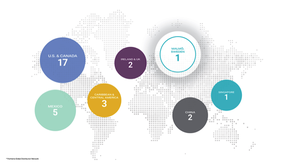
| Physicians state the affect that mobile health would have on their practice. Source: PricewaterhouseCoopers Health Research Institute |
For medical device companies to develop successful devices for the mobile healthcare market, they need to focus on creating devices that not only improve the healthcare experience for both doctors and patients, but also ones that lower costs to the healthcare system as a whole. “Our [U.S.] healthcare system is so extensive and so much energy is invested in maintaining the high level of payment that it creates a disincentive for very inexpensive solutions,” says Wasden.
Part of the cost issue is a result of the general business model used by many medical device companies versus consumer electronics companies, for example. Wasden says that many device companies focus on low volume, high-priced, and high-margined products and need to evolve into a more consumer-centric focus. “When you talk to a consumer electronics company, they’re not interested in creating a $3000 wireless thermometer,” says Wasden.
“They’re interested in creating a $100 wireless computer product that a patient can use on their own, enables the prediction of an asthmatic event, and sends information to clinicians [to] intervene and stop an event.” As a result, a consumer electronics company focuses on the mass market, selling inexpensive devices that are more predictive than diagnostic in nature. This method is more disruptive because it is designed to improve health before a patient becomes ill.
Wasden offers five principles that device companies can use to determine whether a mobile healthcare product will be a success. These principles are as follows:
According to PricewaterhouseCoopers’ Health Research Institute, the annual consumer market for remote and mobile monitoring device is estimated between $7.7 billion and $43 billion. In order for mobile health device adoption to occur, device manufacturers will need to evolve their business model by understanding the patient and consumer population as well as the physician.
More information about mobile health technology and the perspectives of patients, doctors, and other stakeholders is available in PricewaterhouseCoopers’ report, titled “Healthcare Unwired: New Business Models Delivering Care Anywhere.” It can be downloaded from PricewaterhouseCoopers’ Web site.
Mobile Devices
Clearly there's a huge market for mobile devices for use by clinical staff in hospitals - the problem is that it's impossible for anybody who wants to build one to get into a hospital to understand the design constraints. Without ethnographic research - or even just some basic firsthand observation - designers and engineers will just guess what needs to be built, leading to unusable, life-threatening technologies.
Almost Pure Fantasy
Will mHealth be a big deal in the delivery of health care some day? You bet. Will it be soon? If you listen to PWC, Gartner, IDC and others, it's just around the corner. But the almost vertical portion of hockey stick representing rapid mHealth growth has been "around the corner" for the the past several years -- and it doesn't really look any closer.
I attended the the NIH mHealth Summit last November in D.C. (I'll bet Mr. Wasden was there too). All the presentations, from around the world, were about pilots, not real deployments. Many of the vendors exhibiting expressed frustration about building a business on pilots rather than, you know, real purchases.
The mHealth market still lacks a meaningful level of reimbursement from payers, be they government single payors or commercial for-profit payors. And products targeting self-pay are still too expensive. I'd love to have a Body Media Bodybugg, but not for almost $300 plus a monthly charge for the web site. My iPhone was less than that.
The market is slowly winnowing out solutions and a few solutions, as Wasden points out, produce real outcomes both clinically and financially. But we still have a slog ahead of us.
Wasden's observation of conventional medical device manufacturer's business model, and how poorly that matches the mHealth market, is spot on. Besides getting into a business that stands their existing business model on its head, mHealth solutions require core competencies few medical device manufacturers have.
Interoperability is likely the biggest stumbling block for medical device manufacturers. Creating proprietary end-to-end solutions seems to be in the industry's DNA. And it makes sense to use proprietary technology to lock in disposables revenue or to create switching costs for your core product. But extending the proprietary mentality to connectivity and interoperability doesn't work -- it's just too much for one manufacturer to bite off.
The real market -- for established health care companies and wannabes -- is applying the connectivity and workflow automation of mHealth to acute care and ambulatory markets. These are real markets with real reimbursement and billion dollar product categories. And there's a significant reservoir of unmet market requirements that mHealth-like versions of existing products could satisfy.
Mobile Devices
Certainly mHealth is in a formative stage with many companies creating Proof of Concepts. While the issue of mHealth success has much to do with interoperability and other technology obstacles, in my belief, an important issue will be the human adoption of these apps as the airwaves become cluttered with mobile approaches aimed at improving health outcomes for a set of chronic..or acute diseases.
A. Which app to chose
B. Will patients become bored with the app...or recording information
C. Who will administer the app..and do the follow up
D. What are the regulatory issues and liability
E. How do we motivate patients to take action
These and other human factors will dictate the success of the this new channel. Technology will make it available eventually, but as always it is a battle for mindshare, an now....mobile share.