





| From the Editor |
Issues such as labeling and human factors can save (or cost) a life. Manufacturers would do well to remember that in their home use device designs.
Just before the year’s end, FDA released the draft guidance “Design Considerations for Devices Intended for Home Use.” The document aims to assist manufacturers in designing and developing medical devices for home use that comply with applicable standards for safety and effectiveness and other regulatory requirements. But before we get into the document, I want to share with you why medical device designers should never, ever, lose sight of the home user.
In April 2012, I received a heart-breaking letter from one of MD+DI’s editorial advisory board members. I had asked Nancy Stark to comment on a story about medical device safety. The response I got was not what I expected.
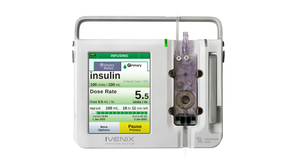
Nancy’s husband, Frank, who was dying of cancer, had developed a systemic staph infection. After a critical week in the hospital, he was sent home with an IV pump for six weeks of home antibiotic therapy. Nancy’s experience with the IV pump was nothing short of dangerous.
“The number of adverse events, device failure, and unrealistic demands placed on the home user are uncountable and inexcusable,” she says.
Here is why this story is particularly upsetting: Nancy Stark is a clinical research and biological safety-testing expert. She is the founder of a medical device consultancy, Clinical Device Group Inc., and has 30 years of experience in the industry. Her husband was a mechanical engineer. If anyone who was not a licensed caregiver could have figured out how the device worked, it was them.
Nancy relayed some of the most torturous moments to me via e-mail. The first night, the pump beeped loudly and incessantly. They called the support hotline for the pump and got an answering service. After 15 minutes (the alarm did not stop), a representative from the company returned their call and said the batteries needed to be changed. The lock on the battery door was jammed, and Nancy, who has arthritis, could not open it. She had to use a hammer and screwdriver to jimmy the door.
Several times over the next few days, the pump displayed the error message “down occlusion.” Nancy never saw the instructions for use (there was a photocopy of a photocopy of the instructions in a binder she found later, tucked under several pages of billing and product information) and had no idea what “down occlusion” meant. Again, she called the toll-free number and awaited a call back. The representative explained that there was a kink somewhere between the pump and the bag. Nancy never found a kink, but she removed tubing from the pump, massaged it, and reinserted it. The problem continued to occur at least once per day, so Nancy continued with the make-do technique.
![]() |
| Nancy and Frank in 2001. |
The disturbances were enough that on Easter, when the couple attended evening mass, Frank shut off the pump and forgot to turn it back on. Nancy didn’t realize the pump was off until noon the next day, and by then Frank was compromised. Nancy called an ambulance to take him to the emergency room. The event nearly cost him his life and resulted in a weeklong stay in the hospital, followed by hospice care.
Frank died April 20, the day after she sent the letter to me.*
“I would trade the first year of our marriage to get the extra two weeks I could have had without the faulty pump,” Nancy says.
Manufacturers can’t monitor how instructions for use get passed on to the user, nor can they ensure both the user and caregiver receive instructions appropriate to the level of device complexity. Likewise, FDA can’t interfere with the practice of medicine. But manufacturers can design user-friendly error notifications, install shut-off buttons or volume controls for alarms once they have been acknowledged, offer easy-to-access online instructions for use, and incorporate visible battery-life gauges, just to name a few applicable solutions.
FDA tackles some of these problems in the new guidance. Key to the document is the agency’s attention to design controls. The document recommends using quality system regulations in addition to risk-management systems per ISO 14971, usability per IEC 62366, and human factors analysis per HE 74 and HE 75. Software per IEC 62304 should be controlled through design control processes. The guidance asks manufacturers to “broaden your existing concept development and preliminary testing processes to account for the needs of home users and requirements for straightforward device operation, obvious interface layouts, and appropriate alarm methods.” There is also a lengthy discussion on labeling.
“The draft guidance document is a big step in the right direction,” Leo Eisner, an MD+DI editorial advisory board member and president of Eisner Safety Consultants, wrote on his blog. Still, there is more to be done, specifically in the area of labeling. “I am disappointed the guidance doesn’t refer to other sections of IEC 60601-1-11:2010 as there are other important areas to consider for marking and labeling,” he wrote.
IEC/ISO 60601-1-11 states that labeling must be understandable by an 8th grader. But in many cases, caregivers and patients need instructions at a much lower level of understanding. “The AMA says that people under stress and terror in a caregiver situation comprehend like 4-year-olds,” Stark says.
The guidance touches on other issues, such as environmental considerations, user considerations, human factors, and postmarket considerations. The document essentially refers readers to existing standards and other guidance documents to increase the likelihood that a device for home use is safe and effective.
FDA’s new guidance doesn’t solve all problems, however. As Nancy's anecdotal struggles with an IV pump illustrate, some problems derive from factors outside of the realm of design controls. Such a heartbreaking tale underscores the need for cooperation at all levels of the system and a reassessment of the costs of such devices to solve. But medical device designers are in the unique position to lead by example and solve as many problems as possible through good design and effective risk-management control.
Corrections
*The original article said that the pump was recalled. The model used by Frank and Nancy has not been recalled.
Rebuttal
On January 24, 2013, Medical Device and Diagnostic Industry (MDDI) published online Heather Thompson’s article “How a Bad IV Pump Got into Nancy Stark's Home.”
While extending our deep sympathies to Mrs. Stark (the caregiver who was the subject of the article), we at Moog are also concerned about the inaccuracies in the article and the potential harm that could be caused if the article’s incorrect statements discourage any users or caregivers from the many significant benefits of Moog’s Curlin pumps.
Had Ms. Thompson taken the opportunity to contact a representative at Moog, she would have been able to provide a more fair and balanced approach to her article. It is unfortunate that in a situation such as this, Moog finds itself needing to clarify and correct many of the claims made in the article. Specifically, it should be noted Moog provides the following:
The Moog Curlin 4000 CMS pump is not on recall.
Moog maintains a 24/7 support hotline to provide assistance and guidance in operating
its infusion pump and advises home health care agencies to have users contact the
Moog support hotline directly when troubleshooting is necessary. In this instance,
however, the caregiver directed her questions and issues to the home health care
company that provided her with the pump. Unfortunately, Moog did not have the opportunity to directly provide any troubleshooting support to Mrs. Stark.
Moog provides access to user manuals, clinician guides, patient guides and training for all of our customers.
Moog maintains an external website that also provides full contact information.
Moog complies with and supports the efforts made by FDA to assist with patient safety and continues to make its medical devices user friendly. The safety, support and patient ease of use of Moog medical devices are critical elements in our efforts to manufacture products currently on the market and in the manufacturing of products under development.
Moog’s infusion pumps have adjustable alarm volume controls], including High / Medium / Low / Silent options.
From reading this article, it appears to Moog that the intent of the writer was to bias the audience against medical device manufacturers and provide the misleading impression that device manufacturers are not looking at this topic. Moog has, independently and historically,
incorporated some of the suggestions listed in the article in its current products and also is looking at this important topic in its future devices under development.
In the future, we request that more attention be paid in providing accurate information, especially when a topic focuses on a very personal matter for Mrs. Stark. Not only will an approach for accurate reporting benefit the medical device and design industry, it will help clinicians and users of medical devices to be able to be informed on the infusion pumps in the marketplace.
Corrected
Thanks to Moog for responding to this article. The inaccuracies they note have been corrected.
—Heather Thompson
Comprehending like a 4-year-old
It is well established in the psychology and human factors engineering literature that time pressure and stress adversely affects decision-making and cognition. To ignore this, combined with potential physical limitations and social constraints, is irresponsible. And, it is not just the so-called “8th grade-level general populace” that devolves to near a 4-year-old level of comprehension. I have personally observed a highly-skilled clinician “freak out” and not respond appropriately, when her 2-year-old child nearly choked to death on a bus on a remote island.
Human factors engineering is about fitting the medical device “tool” to the human user. This means that you need to understand not only the intended use, but also the physical, cognitive, social, and cultural “co-morbidities.” Outside the normal clinical working environment (in the home or on the road), there are very different design constraints from the traditional design for the hospital or clinic. Users have physical or environmental limitations related to seeing, hearing, and handling devices. In an emergency, decision-making and cognition can be profoundly degraded, especially when the emergency occurs outside the normal work environment and the social support structures traditionally associated with the person’s training are absent or compromised.
This is really nothing new! Medical device manufacturers and regulators know, or should recognize, these fundamentally different engineering design considerations. If not, there is still no excuse for not doing it correctly; it is not rocket science and there are many competent human factors engineers that can help.
GM Samaras Pueblo, CO