






Outsourcing to China is an increasingly popular strategy for medical device manufacturers. But there are a number of risks in doing so. Business ethics can be very different in Asian companies as opposed to North American or European companies. It is almost certain that you can be assured of the lowest initial price with this strategy. But are you aware of the overall business risk you are assuming with this strategy? Two huge risks are sourcing ethics and exposure of your intellectual property.

Let’s first discuss the ethical implications of outsourcing to China. A book titled “
Poorly Made in China” by
Paul Midler illustrates the types of problems one can encounter when outsourcing to Asia. I recommend the book to anybody who makes sourcing decisions in China (or, for that matter, anyone who purchases anything from the big retail stores). The author recounts his experience as a liaison for U.S. and European companies sourcing products in China. The author was educated in the United States, but has lived in China for a number of years and is fluent in the language and culture of the East and West.
Most of the companies represented by the author are in the cosmetics business. The author’s examples follow a consistent framework. Initially the customer is overwhelmed by the amazingly low price agreed to by the Chinese manufacturer. All goes well with the first shipment. Products meet agreed to specifications…but then problems begin to emerge. The Chinese supplier has taken the original business “at cost.” Of course, they need to make a profit and have a couple of common strategies they employ in this regard. One is to “cost-reduce” your products…without informing you of this activity.

In a classic example from the cosmetics industry, the Chinese company was producing liquid soap in plastic bottles. The suppliers decided to make the container walls thinner (even though the thermoplastic molds were owned by the U.S. customer). The U.S. customer only became aware of this after a shipment arrived in the United States and the bottles actually fell over because they had insufficient wall thickness to support the load of the liquid.
Tell Us What You Think
We want to know what you thought about this feature. Let us know by adding a comment.
ADD A COMMENT >
|
In another example from the cosmetics industry, the Chinese supplier decided (without consulting the customer) they could swap out an ingredient component to reduce cost. The component in question affected the scent of the liquid detergent (it was formulated to have the scent of almond). With the swapped component, the scent was no longer that of almonds…it now smelled more like apricots. Of course, having a scent of apricot as opposed to almonds is perhaps not the end of the world. And it is not likely to create any great obvious afflictions to consumers. But the principle is compelling. Several examples in the book point out this disturbing fact. Some suppliers like to play this game of “catch me if you can.” Unfortunately, this game can have serious consequences in the right situation.
One recent tragic example involving a medical application involved the blood-thinning drug Heparin. Baxter is a provider of this formulation. According to the TV program “60 Minutes,” Baxter sourced a key active component through a third party who, in turn, sourced the component in China. The Chinese supplier provided a component that was structurally close to the active component of Heparin but did not have the redeeming properties of the real component. During quality testing, neither the third party nor Baxter was able to detect this difference. This scenario has led to a number of deaths and to litigation involving Baxter, FDA, and individuals. The final implications of this tragedy have not yet been determined, but the financial impact alone will likely be in the billions of dollars. Of course, the legal teams are not going after the Chinese supplier or even the third-party…just Baxter.
My belief is that Baxter was able to get a dramatic initial cost reduction through the third-party supplier of source material in China. It is obvious, however, that Baxter didn’t understand the implications of that decision.
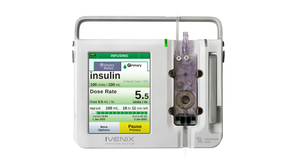
Another scary example involves infusion pumps, which are used to deliver multiple drugs to patients typically in a hospital situation. In December of 2010, FDA asked Baxter to recall and destroy all shipped units of the Collegiate Infusion pump. Many thousands of these units had been shipped in the last six years. A number of problems had been found by customers and FDA during the life of this product. After much effort on the part of the manufacturer, FDA asked Baxter to give up on this device and recall all devices. Unfortunately, a number of deaths have also been attributed to this device. Many problems were uncovered with the device (as well as infusion pumps designed and manufactured by other companies). One involved a divergent interaction of the batteries and software. In some units, it seems if the batteries failed the software would allow for the free flow of drug to the patient. The litigation and human tragedy of this scenario is continuing to unfold. Where were the batteries produced? How about the software? You guessed it. China.
The same thing happened again just recently! I was having dinner on the East Coast with a former client who now works at a director level for a leading medical device company. I told him about the book “Poorly Made in China” as well as what I had heard form from other folks who have major sourcing initiatives in China. When I mentioned the Chinese “cat-and-mouse” game regarding ingredient and process changes without customer approval, his eyes widened. He then said “we found a couple of suppliers who did the same thing to us…They switched materials without our approval.” He went on the say that, when this happened, they immediately disqualified the supplier as a source. But what if you do not make this determination until it is too late for your customer?
What about your intellectual property? It is common knowledge that many Chinese companies have little regard for U.S. copyright laws (some suggest this is beginning to change slowly). While in Shanghai in 2006, at a break in our seminar, one of my U.S. sponsors was having a discussion with his team regarding products I was offering such as books, analysis software, and training aids. The consensus amount the group was that all would be easy to reproduce cheaply in China. Visits to the “Shanghai Market” in this same era could yield incredible prices for knock-off watches, purses, jewelry, and software. Software was priced based on number of CDs required to copy. If it all fit on one CD, $10.00 was the price. Two CDs meant you needed to pay $20.00.
The bottom line is that medical device companies need to carefully consider the business risk associated with sourcing decisions. Again, the promise of an almost unbelievably low cost is very alluring to U.S. and European organizations….but what is the risk? What about your intellectual property? What would happen to your product if the process was to change without your authorization? Would you be able to catch the change? What would the impact be on the user? Can you afford to take this risk?
Login or
register to post comments
Missing a Key Part of the Story
Although some good cautionary points were mentioned in Mr. Launsby's feature, a bit of common sense (coupled with personal experience) may shed some additional light when considering a contract manufacturing option in China.
First, look for a Western firm based in China; don't go with a purely domestic firm. Example: Maple Tree in Qingdao (in north China).
Second, if core IP can be reverse engineered in a way that is unique to a discrete manufacturing and assembly process, then it might be wise to skip a China option. Example: Perhaps a proprietary discrete manufacturing technology is used to manufacture a product. In this case, don't do it in China. But the fact is that there is not likely going to be the potential for a lot of IP leakage specific to what may be uniquely learned by the contract manufacturer.
Third, in China you never get what you expect; instead, you get what you inspect. Cute phrase, but take it to heart.
Fourth, when qualifying a contract manufacturing firm, especially if considering a purely domestic (Chinese) firm, be prepared to do spot inspections, random visits, require information portals, and the list goes on. You may also need to get access to their financials, although financials in China can border on being great works of fiction.
Fifth, don't be a guinea pig. NEVER volunteer to be the first account. And check references. And re-check.
Sixth, make sure the company culture is synonymous with GMPs. We all know it when we see it, right?
Finally, limit to Class I and II. Don't be silly and try a Class III device.
Following Michael Porter's The Competitive Advantage of Nations, China is the spot for manufacturing. Follow my tips and you'll likely do it right.
The High Cost of Outsourcing to China
Fantastic article. Confirms what I've read elsewhere. Should be required reading for all decision makers prior to making an outsourcing decision.
Outsourcing to China
Thanks for the feedback, Mike.